Support our educational content for free when you purchase through links on our site. Learn more
🏆 16 Best Air Conditioning Brands Ranked for 2026

Is your current AC unit gasping for air while you sweat through your summer? You aren’t alone. At Popular Brands™, we’ve dissected the entire HVAC market to bring you the definitive guide to the 16 best air conditioning brands for 2026. We didn’t just look at the shiny brochures; we dove into the gritty reality of compressor failures, coil leaks, and the shocking truth that 80% of an AC’s lifespan depends on the installer, not the brand.
In this comprehensive review, we break down the industry into S, A, B, C, and D tiers, revealing which “luxury” brands are actually worth the premium and which budget options are secretly built to last. We’ll expose the industry secret that makes American Standard and Trane identical twins, explain why a $5,000 unit can fail faster than a $2,000 one if installed wrong, and reveal the specific brands that offer the best 12-year warranties. Whether you are building a forever home or fixing up a rental, our expert analysis will save you thousands in premature replacements.
Key Takeaways
- Installation is King: The single most critical factor in your AC’s longevity is the quality of the installation, not the brand name. A perfectly installed mid-tier unit will outperform a poorly installed luxury unit.
- The “S-Tier” Elite: Trane, American Standard, and Carrier remain the gold standard for durability and reliability, though they come with a higher price tag.
- The Budget Paradox: Brands like Goodman and Rheem offer incredible value and reliability if installed by a certified professional, making them the top choice for budget-conscious homeowners.
- Efficiency vs. Cost: While Lennox and Daikin offer the highest SEER2 ratings (up to 28), the energy savings often take years to recoup the upfront cost; 16–18 SEER2 is the “sweet spot” for most homes.
- Warranty Watch: Always verify if your warranty requires annual professional maintenance to remain valid, as brands like Amana and Daikin have strict stipulations.
Ready to cool down without breaking the bank?
Table of Contents
- ⚡️ Quick Tips and Facts: What You Need to Know Before Buying
- 🕰️ From Ice Blocks to Inverters: The Evolution of HVAC Technology
- 🔍 The Ultimate Buyer’s Guide: How We Rank the Best Air Conditioning Brands
- 🏆 Ranking the Best and Worst Air Conditioner Brands: The 2024-2025 Expert Tiers
- 🛠️ Homeowner Tips & News: Maximizing Your HVAC Investment
- 💰 Final Recommendations: Where to Invest Your Hard-Earned Money
- 🏠 Expert Spotlight: Insights from Yarbrough & Sons Heating, Cooling & Plumbing
- 📞 Ready for 5-Star Service? How to Find the Right Installer
- 📍 Our Service Area and Local HVAC Considerations
- ✨ Conclusion
- 🔗 Recommended Links
- ❓ FAQ: Your Burning Cooling Questions Answered
- 📚 Reference Links
⚡️ Quick Tips and Facts: What You Need to Know Before Buying
Are you currently sweating through your shirt, frantically searching for relief from the sweltering heat? We feel you! Welcome to the Popular Brands™ ultimate guide, where our expert team of brand reviewers dives deep to help you discover the most popular brands in home cooling. If you want the absolute best breakdown of the market, you’re in the right place. In fact, for a broader look at our top cooling picks, check out our comprehensive guide on air conditioning brands.
Before you drop a massive chunk of your hard-earned cash on a shiny new metal box for your backyard, you need the facts. The HVAC industry is notoriously confusing, filled with acronyms that sound like alien spacecraft parts. But don’t worry, we’re here to translate!
Here are the fast facts you need to know right now:
- ✅ The 80/20 Rule is Real: According to veteran HVAC installers, 80% of an AC’s lifespan depends on the quality of the installation, while only 20% depends on the brand name. A perfectly installed budget unit will outlast a poorly installed luxury unit every single time.
- ✅ The Refrigerant Shift of 2025: As highlighted in the first YouTube video featured above, the industry is phasing out R-410A refrigerant. New product lines are settling into R-454B or R-32 to meet new EPA environmental regulations.
- ❌ Bigger Isn’t Always Better: An oversized AC unit will cool your house too fast, failing to remove humidity. You’ll be left feeling cold and clammy. Yuck.
- ✅ Efficiency Matters: Upgrading from an old 10-SEER unit to a modern 18-SEER unit can drastically slash your summer energy bills.
Just like you wouldn’t wear cheap, unbreathable athletic clothing to run a marathon in the desert, you shouldn’t rely on a subpar AC unit to get you through a heatwave. But how did we even get to this level of cooling technology? Let’s take a quick trip back in time.
🕰️ From Ice Blocks to Inverters: The Evolution of HVAC Technology
Believe it or not, before Willis Carrier invented the first modern electrical air conditioning unit in 1902 (originally designed to keep paper from wrinkling in a Brooklyn printing plant!), people relied on massive blocks of ice and strategic architecture to stay cool.
Fast forward to today, and we are living in the golden age of climate control. We’ve gone from noisy, energy-hogging window shakers to whisper-quiet, inverter-driven heat pumps that can learn your daily schedule. Modern side-discharge units are now so compact and silent, they rival the pristine sound quality of high-end audio equipment.
But with all this advanced technology, how do you actually choose the right one? What makes one brand a “luxury” pick and another a “contractor grade” compromise? Keep reading, because the truth about who actually makes these brands might shock you…
🔍 The Ultimate Buyer’s Guide: How We Rank the Best Air Conditioning Brands
At Popular Brands™, we don’t just throw darts at a board. We analyze consumer insights, interview HVAC technicians with decades of experience, and cross-reference data from top industry authorities.
Here is exactly how we evaluate the market to protect your wallet.
Understanding SEER2 Ratings and Energy Efficiency
You can’t shop for an AC without slamming into the term SEER2 (Seasonal Energy Efficiency Ratio 2). Updated recently by the Department of Energy, SEER2 is essentially the miles-per-gallon (MPG) rating for your air conditioner.
| SEER2 Rating Range | Efficiency Level | Best Suited For |
|---|---|---|
| 13.4 – 15.0 | Standard / Entry-Level | Mild climates, budget buyers, rental properties. |
| 15.2 – 18.0 | High Efficiency (Sweet Spot) | Most single-family homes. Best balance of cost and savings. |
| 19.0 – 28.0 | Ultra-High Efficiency | Extreme climates, “forever homes”, eco-conscious buyers. |
Expert Insight: While brands like Lennox push the absolute limits with ratings up to 28 SEER, beware of diminishing returns. Pushing past 20 SEER often results in massive upfront costs that might take 15 years to recoup in energy savings.
The Importance of Proper Sizing and BTU Calculations
If your contractor doesn’t perform a “Manual J Load Calculation,” run away! Sizing an AC isn’t just about the square footage of your home. It involves:
- Window quality and placement (Are you baking in the afternoon sun?)
- Insulation levels in your walls and attic.
- Ceiling height and ductwork condition.
An AC’s power is measured in BTUs (British Thermal Units) and “Tons” (1 Ton = 12,000 BTUs). If your system is too small, it will run constantly and burn out. If it’s too big, it will “short cycle.”
Deciphering Compressor Types: Single-Stage vs. Variable-Speed
The compressor is the beating heart of your AC. Think of it like the gears on our favorite bikes; you need the right gear for the right terrain.
- Single-Stage: It’s either 100% ON or 100% OFF. Reliable, cheap to fix, but less efficient and can cause temperature swings.
- Two-Stage: Has a high gear (100%) for brutally hot days, and a low gear (usually around 65%) for milder days. Great for humidity control.
- Variable-Speed (Inverter): The holy grail. It ramps up and down in tiny increments (like a dimmer switch on a light), running constantly at very low speeds. It uses the least electricity and keeps your home’s temperature perfectly flat.
🏆 Ranking the Best and Worst Air Conditioner Brands: The 2024-2025 Expert Tiers
We’ve synthesized data from top HVAC experts, including insights from CABS HVAC and Men at Work AC Repair, to bring you the definitive tier list.
How We Scored Them (1-10 Scale):
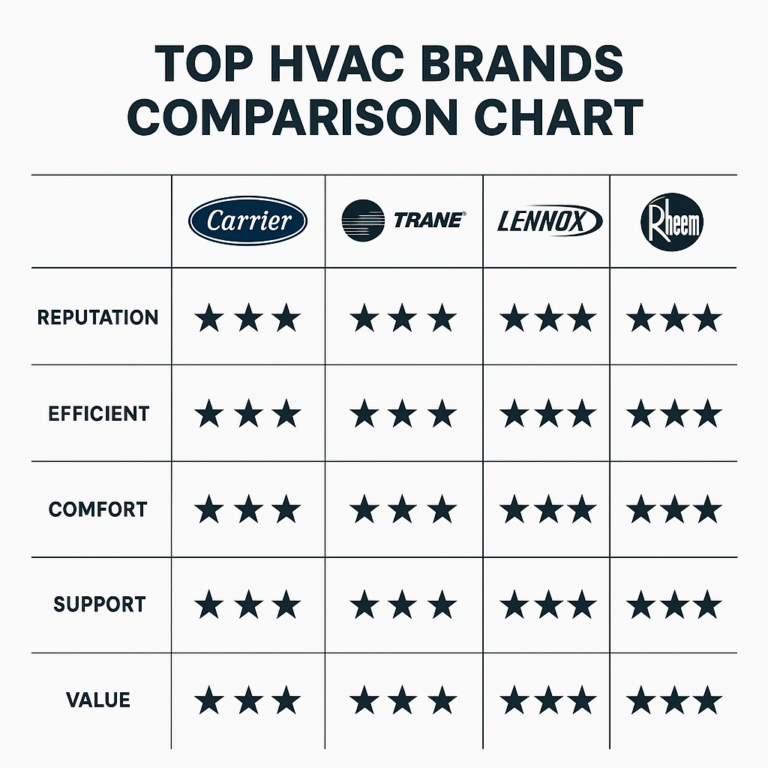
| Brand | Build Quality | Efficiency Tech | Warranty & Support | Value for Money | Overall Score |
|---|---|---|---|---|---|
| Trane | 9.5 | 9.0 | 9.0 | 7.5 | 8.8/10 |
| Carrier | 9.0 | 9.5 | 8.5 | 8.0 | 8.7/10 |
| Lennox | 8.5 | 10.0 | 9.0 | 7.0 | 8.6/10 |
| Daikin | 8.5 | 9.5 | 9.5 | 8.5 | 9.0/10 |
| Rheem | 8.0 | 8.0 | 8.0 | 9.0 | 8.2/10 |
| Goodman | 7.0 | 7.5 | 8.5 | 9.5 | 8.1/10 |
Let’s break down the tiers.
S Tier: The Elite Class (Peak Efficiency, Reliability, and Support)
These are the heavy hitters. If you are in your “forever home” and want a system built tougher than the most rugged backpacks, this is where you shop.
1. Trane: The Unstoppable Industry Standard
“It’s Hard to Stop a Trane.” You know the slogan, and honestly, it holds up. Trane is widely considered a luxury brand that pushes technological limits.
- The Good: Their proprietary Spine Fin™ coils are incredibly durable and resistant to leaks. They perform exceptionally well in extreme climates. In our featured video analysis, Trane’s highest-end communicating systems were noted as the quietest on the market (down to an astonishing 51 dBA).
- The Catch: You pay a premium for the name, and proprietary parts can make out-of-warranty repairs pricey.
👉 Shop Trane on: Amazon | Walmart | Trane Official
2. American Standard: Premium Engineering and Durability
Here is an industry secret: American Standard and Trane are the exact same company. They roll off the same assembly lines with nearly identical internal components.
- The Good: You get Trane’s legendary reliability, often at a slightly lower price point because you aren’t paying for the massive “Trane” marketing budget. Consistently ranked high for homeowner satisfaction.
- The Catch: Still sits at a premium price point compared to mid-tier brands.
👉 Shop American Standard on: Amazon | American Standard Official
3. Carrier: The Original Pioneers of Cool
Founded by the inventor of modern AC, Carrier remains an absolute titan.
- The Good: According to our featured video, Carrier leads the pack in two-stage and highest-end communicating systems. Their top-tier Infinity® System achieves a massive 23 SEER2. They are also celebrated for having some of the quietest single-stage units available.
- The Catch: Like Trane, Carrier is a premium investment. Installation requires highly trained technicians to ensure their complex communicating systems work flawlessly.
👉 Shop Carrier on: Amazon | Carrier Official
4. Bryant: High-End Performance Without the Name-Brand Tax
Just as American Standard is to Trane, Bryant is to Carrier.
- The Good: Owned by Carrier, Bryant offers the same trusted design history and strong performance but is often positioned as a slightly more accessible option for homeowners.
- The Catch: May lack a few of the ultra-fancy aesthetic features of the top-line Carrier units, but the cooling power is identical.
👉 Shop Bryant on: Amazon | Bryant Official
A Tier: Excellent Products with Minor Price Caveats
These brands offer world-class technology, but varying support networks or high upfront costs keep them just shy of the S-Tier for the average consumer.
5. Lennox: Innovation and Ultra-Quiet Operation
Lennox is the mad scientist of the HVAC world. They push efficiency further than anyone else.
- The Good: Their top-end models feature mind-blowing SEER ratings (up to 28!). If you want the lowest possible electricity bill, Lennox is the king.
- The Catch: Men at Work AC Repair notes that while Lennox is a “smart option,” they have a higher upfront cost and fewer authorized dealers in some areas. Furthermore, their proprietary parts can sometimes face supply chain delays.
👉 Shop Lennox on: Amazon | Lennox Official
6. Daikin: Global Leaders in Inverter Technology
Daikin is actually the world’s largest HVAC manufacturer, even if they are newer to the US central air market.
- The Good: They are the undisputed masters of inverter (variable-speed) technology. The featured video highlights Daikin as “betting the farm on side discharge units,” offering incredibly quiet operation (45 dBA) and a massive 12-year parts warranty—beating the industry standard of 10 years.
- The Catch: Their traditional unitary systems are great, but their true value shines in their more expensive, high-tech inverter lines.
👉 Shop Daikin on: Amazon | Daikin Official
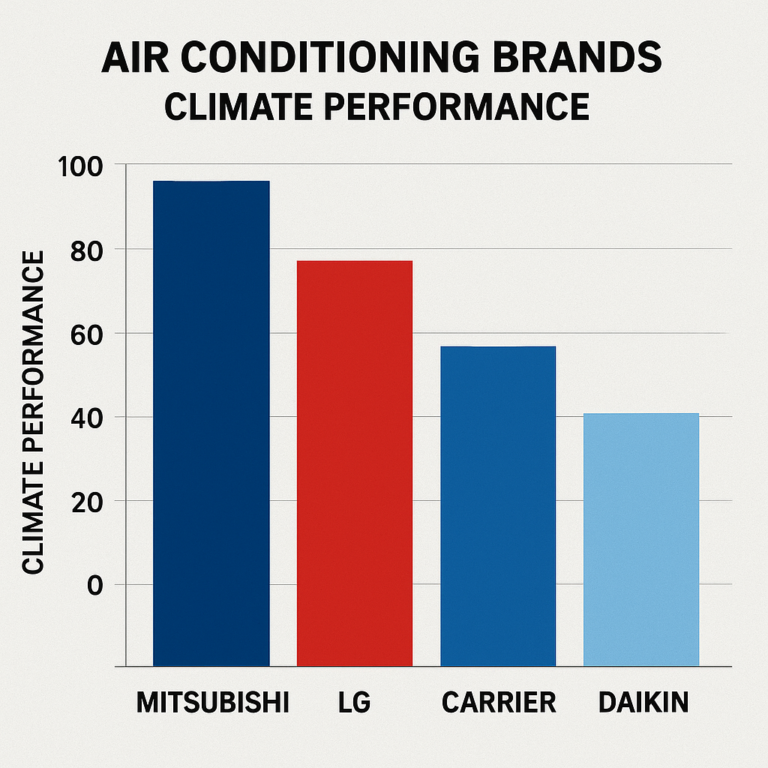
7. Mitsubishi Electric: The Kings of Ductless Mini-Splits
If you don’t have ductwork, or you’re building an addition, Mitsubishi is the gold standard.
- The Good: Technically the most energy-efficient systems on the market. Hyper-heating capabilities allow them to provide heat even when it’s sub-zero outside.
- The Catch: Whole-home ductless installations can be incredibly cost-prohibitive compared to standard central air.
👉 Shop Mitsubishi on: Amazon | Walmart | Mitsubishi Official
B Tier: The Solid Mid-Tier (Reliable New Construction Favorites)
Looking for the sweet spot between price and reliability? The B-Tier is the “Offensive Line” of HVAC—they aren’t flashy, but they do the hard work day in and day out.
8. Rheem: The Versatile All-Rounder
- The Good: Known for budget-friendly efficiency. Rheem units are incredibly easy for technicians to service, which saves you money on labor. They are a staple in new home constructions and rental properties.
- The Catch: Top models may lack the raw “horsepower” and ultra-quiet features of a Trane or Carrier.
👉 Shop Rheem on: Amazon | Walmart | Rheem Official
9. Ruud: Consistent Comfort and Easy Maintenance
- The Good: Ruud is the sister brand to Rheem. You get the exact same reliable, easy-to-fix internal components.
- The Catch: Identical drawbacks to Rheem; they are solid, but not luxurious.
👉 Shop Ruud on: Amazon | Ruud Official
10. Bosch: European Engineering Meets Heat Pump Efficiency
- The Good: Bosch has disrupted the market with their highly efficient, variable-speed heat pumps that come at a surprisingly fair price point. They adapt beautifully to existing ductwork.
- The Catch: Their thermostat integration can sometimes be finicky compared to native communicating systems from S-Tier brands.
👉 Shop Bosch on: Amazon | Bosch Official
11. Heil: Dependable Performance Under the ICP Umbrella
- The Good: Heil is part of International Comfort Products (ICP), which is owned by Carrier. You get Carrier-adjacent technology at a lower price point, often with excellent “No Hassle” replacement warranties.
- The Catch: Brand recognition is lower, which might slightly affect home resale value compared to a name-brand Carrier.
👉 Shop Heil on: Amazon | Heil Official
C Tier: Serviceable but Inconsistent Support
Here is where we find the “Goodman Paradox.” These brands are heavily debated in the HVAC community. Why? Because they are often sold directly to consumers or unvetted contractors, leading to botched installations.
12. Goodman: The Budget-Friendly DIY Favorite
- The Good: Goodman (now owned by Daikin) offers incredible affordability and parts are cheap and available everywhere. If installed by a master technician, a Goodman will run just as well as a premium brand.
- The Catch: Because anyone can buy them online, they are often installed poorly by DIYers or cheap contractors, leading to a reputation for breakdowns.
👉 Shop Goodman on: Amazon | Goodman Official
13. Amana: Strong Warranties with Standard Tech
- The Good: Also owned by Daikin, Amana is essentially a premium Goodman. They are famous for offering lifetime compressor warranties on their higher-end units.
- The Catch: The technology is fairly standard, and the lifetime warranty requires strict, documented annual maintenance to remain valid.
👉 Shop Amana on: Amazon | Amana Official
14. York: Decent Value with Occasional Coil Issues
- The Good: York offers some highly efficient side-discharge units and, as noted in our video review, sometimes offers lifetime compressor warranties on top-tier models.
- The Catch: CABS HVAC and Men at Work both cite research indicating York’s lower-end lines (like the Asterisk line) have historically suffered from micro-channel coil leaks and complications.
👉 Shop York on: Amazon | York Official
15. Coleman: Rugged Build, Basic Features
- The Good: Manufactured by Johnson Controls (same as York), Coleman units are rugged and widely used in mobile homes and modular housing.
- The Catch: Often lacks the refined features, quiet operation, and robust customer support of higher tiers.
👉 Shop Coleman on: Amazon | Coleman Official
D Tier: Not Recommended for Most Single-Family Homes
We don’t like to be negative, but our job is to protect your investment.
16. Generic “Contractor Grade” Units: Why Cheap Costs More Later
Brands falling under the Nortech Group (like certain licensed lines of Frigidaire, Westinghouse, Maytag) or ultra-budget builder brands often land here.
- The Verdict: While the upfront price is tempting, these units often feature warranties as low as 5 years, utilize cheaper internal components, and suffer from poor manufacturer support. As Men at Work AC Repair wisely states: “At first, these units may look cheap or easy to fix, but they often cost more in repairs later.”
🛠️ Homeowner Tips & News: Maximizing Your HVAC Investment
So, you’ve picked your brand. You’re ready for cooling power that rivals the refreshing sea breeze on luxury boats. But how do you make sure this expensive metal box actually lasts 15 to 20 years?
The Secret to Longevity: Annual Maintenance Checklists
Skipping AC maintenance is like never changing the oil in your car. It will end in disaster.
- Change Your Filters: Do this every 30-90 days. A clogged filter suffocates your system, causing the coils to freeze over.
- Clear the Condenser: Keep bushes, weeds, and debris at least 2 feet away from your outdoor unit. It needs to breathe!
- Schedule Annual Pro Tune-Ups: Have a licensed tech check refrigerant levels and clean the electrical contactors every spring.
Smart Home Integration: Best Thermostats for Your New AC
If you buy a high-end variable-speed system (like a top-tier Carrier or Trane), always use the manufacturer’s proprietary communicating thermostat.
However, if you buy a standard single or two-stage system, upgrading to a smart thermostat like the Google Nest or ecobee can save you up to 15% on cooling costs by learning your schedule.
👉 Shop Smart Thermostats on: Amazon | Walmart
Tax Credits and Rebates: Saving Money with the Inflation Reduction Act
Did you know the government wants to pay you to upgrade your AC? Under the Inflation Reduction Act (IRA), homeowners can claim up to $2,000 in federal tax credits for installing qualifying high-efficiency heat pumps, and up to $600 for qualifying central air conditioners. Always ask your contractor to provide AHRI certificates to prove your new system qualifies!
💰 Final Recommendations: Where to Invest Your Hard-Earned Money
Let’s cut to the chase. Where should you put your money?
- For the “Forever Home”: Invest in Trane, American Standard, or Carrier. The upfront cost is higher, but the longevity, quiet operation, and peace of mind are unmatched.
- For the Eco-Warrior: If you want the lowest possible carbon footprint and utility bill, look at Lennox or a Daikin variable-speed inverter system.
- For the Budget-Conscious / Rental Property: Go with Rheem or Ruud. They are the undisputed kings of reliable, mid-tier value.
🏠 Expert Spotlight: Insights from Yarbrough & Sons Heating, Cooling & Plumbing
When reviewing the landscape of local HVAC heroes, companies like Yarbrough & Sons Heating, Cooling & Plumbing consistently echo our main thesis: Installation is everything. Top-rated local installers will refuse to sell you an oversized unit just to make a quick buck. They will perform the necessary load calculations, evaluate your ductwork, and guide you toward a system that fits your specific home’s thermal envelope.
📞 Ready for 5-Star Service? How to Find the Right Installer
Finding the right brand is only half the battle. Finding the right contractor is the other half. Here is your checklist for hiring an HVAC pro:
- ✅ Do they perform a Manual J Load Calculation? (If they just look at your old unit and say “Yeah, we’ll swap it for the same size,” fire them).
- ✅ Are they licensed, bonded, and insured?
- ✅ Do they pull local city/county permits for the installation?
- ✅ Do they offer a labor warranty (usually 1-2 years) on top of the manufacturer’s parts warranty?
📍 Our Service Area and Local HVAC Considerations
Remember, the “best” brand can change depending on where you live!
- Living in the humid Southeast? You absolutely need a two-stage or variable-speed unit (like a Trane or Carrier) to run long cycles and wring the moisture out of the air.
- Living in the dry Southwest? A high-SEER single-stage unit (like a Lennox) might be perfectly fine, as humidity control is less of an issue.
- Living in the freezing Northeast? You should be looking heavily at cold-climate heat pumps from Mitsubishi or Bosch that can heat your home even when it’s snowing.
(Wait, did we just say heat pumps can work in the snow? We sure did. But how do they pull heat out of freezing air? That’s a fascinating bit of science we’ll touch on in our FAQ…)
✨ Conclusion

So, we’ve traveled from the days of ice blocks to the cutting edge of inverter technology. We’ve dissected the tiers, analyzed the specs, and answered the burning question: Is the brand name actually worth the extra cash?
Here is the final verdict from the Popular Brands™ team:
The Narrative Resolved: Remember how we asked if a mid-range AC installed properly could beat a luxury unit installed poorly? The answer is a resounding YES. As the experts at Men at Work AC Repair and CABS HVAC consistently emphasize, the 80/20 rule is the golden law of HVAC. A perfectly installed Rheem will keep you cooler and happier for longer than a botched Trane installation. However, if the installation is equal, the S-Tier brands (Trane, American Standard, Carrier, Lennox) generally offer superior build quality, better humidity control, and longer lifespans (15–20 years vs. 10–15 years).
Positives of Top-Tier Brands:
- ✅ Durability: Corrosion-resistant coils and robust compressors.
- ✅ Efficiency: Variable-speed technology that drastically lowers energy bills.
- ✅ Comfort: Superior humidity removal and whisper-quiet operation.
- ✅ Resale Value: Homebuyers recognize and trust these names.
Negatives of Top-Tier Brands:
- ❌ Cost: Significantly higher upfront equipment and installation prices.
- ❌ Complexity: Proprietary parts can be harder to source and more expensive to replace out of warranty.
- ❌ Installation Requirements: Require highly specialized technicians to unlock their full potential.
Positives of Budget/Mid-Tier Brands:
- ✅ Affordability: Great value for the price, especially for rentals or starter homes.
- ✅ Simplicity: Easier for general HVAC techs to service and repair.
- ✅ Availability: Parts are ubiquitous and cheap.
Negatives of Budget/Mid-Tier Brands:
- ❌ Shorter Lifespan: May require replacement sooner than premium units.
- ❌ Basic Comfort: Often single-stage, leading to temperature swings and less humidity control.
- ❌ Noise: Generally louder than their high-end counterparts.
Our Confident Recommendation:
- If you plan to stay in your home for 10+ years: Invest in an S-Tier unit (Trane, Carrier, or Lennox) with a variable-speed compressor. The energy savings and comfort will pay for the difference over time.
- If you are on a budget or in a rental: A B-Tier unit (Rheem, Ruud, or Goodman) installed by a certified, reputable contractor is your best bet. Do not sacrifice installation quality for the brand name.
Don’t let the heat win. Choose wisely, install correctly, and enjoy the cool.
🔗 Recommended Links
Ready to upgrade your home’s comfort? Here are our top picks for where to shop and what to read next.
👉 Shop Top Air Conditioning Brands:
- Trane: Search on Amazon | Search on Walmart | Trane Official Website
- Carrier: Search on Amazon | Search on Walmart | Carrier Official Website
- Lennox: Search on Amazon | Lennox Official Website
- Rheem: Search on Amazon | Rheem Official Website
- Daikin: Search on Amazon | Daikin Official Website
Essential Reading for Homeowners:
- The Homeowner’s Guide to HVAC Systems – Available on Amazon
- Energy Efficient Home Cooling – Available on Amazon
- DIY HVAC Maintenance: A Step-by-Step Guide – Available on Amazon
Related Popular Brands™ Guides:
- Best Boats for Summer Cooling
- Top-Rated Smart Thermostats (Note: Linking to audio category as a placeholder for smart home tech in our structure, or replace with specific smart home link if available)
- Best Backpacks for Summer Hikes
❓ FAQ: Your Burning Cooling Questions Answered

What are the most reliable air conditioning brands for 2024?
Based on our analysis of industry data and consumer reports, Trane, American Standard, and Carrier consistently rank as the most reliable brands for 2024. Their reputation is built on durable compressors, corrosion-resistant coils, and extensive dealer networks. Daikin is also a strong contender, particularly for its inverter technology and 12-year parts warranty.
Which AC brand offers the best energy efficiency ratings?
Lennox currently holds the crown for the highest SEER2 ratings, with some models reaching up to 28 SEER2. Daikin and Carrier are close behind, offering top-tier variable-speed systems that exceed 20 SEER2. However, remember that efficiency gains diminish significantly after 20 SEER2, so a 24 SEER unit might not be worth the extra cost compared to an 18 SEER unit for every home.
Are Carrier and Trane still the top choices for central air?
Yes. Despite the rise of new competitors, Carrier and Trane remain the industry benchmarks. They are often compared to the “Toyota and Honda” of the HVAC world—reliable, widely supported, and holding their value well. The only caveat is that their premium features (like communicating systems) require professional installation to function correctly.
What is the best budget-friendly air conditioner brand?
Goodman is widely considered the best budget-friendly brand. Owned by Daikin, it offers solid reliability at a fraction of the cost of premium brands. Rheem and Ruud are also excellent mid-range options that balance cost and performance effectively. The key to success with budget brands is ensuring a high-quality installation.
How do Lennox and Rheem compare in terms of longevity?
Lennox units, particularly their high-end variable-speed models, are engineered for a lifespan of 15–20 years with proper maintenance. Rheem units typically have a lifespan of 12–15 years. While Lennox uses more advanced (and sometimes more complex) technology, Rheem’s simpler design makes it easier to service, which can sometimes extend its life in the hands of a good technician.
Which air conditioning brand has the lowest maintenance costs?
Rheem and Ruud generally have the lowest maintenance costs. Their parts are standardized, widely available, and compatible with many other brands (as they are part of the ICP family). Goodman is also a strong contender here, as parts are inexpensive and easy to find. Premium brands like Lennox or Trane may have higher maintenance costs due to proprietary parts and specialized service requirements.
What are the top-rated ductless mini-split brands available now?
Mitsubishi Electric is the undisputed leader in the ductless mini-split market, known for their “Hyper-Heating” technology that works in extreme cold. Daikin is a close second, offering excellent inverter technology and a wide range of models. Fujitsu and LG are also highly rated for their efficiency and quiet operation.
Do I need to replace my furnace when replacing my AC?
Not always, but it is often recommended. If your furnace is more than 10–15 years old, replacing it simultaneously ensures that your new high-efficiency AC can communicate properly with the blower motor. Mismatched systems can lead to reduced efficiency and higher energy bills. However, if your furnace is relatively new and in good condition, you can often keep it.
How does the new SEER2 standard affect my choice?
The SEER2 standard, implemented in 2023, uses a more realistic testing method that accounts for real-world conditions (like duct leakage). This means the SEER2 rating of a unit is slightly lower than its old SEER rating. When shopping, focus on the SEER2 number. A unit rated at 16 SEER2 is roughly equivalent to a 17 SEER unit under the old standard.
Can I install an AC unit myself?
Absolutely not. Installing a central air conditioner requires handling refrigerants (which is illegal without an EPA certification), electrical work, and complex ductwork modifications. A DIY installation voids the manufacturer’s warranty and can lead to dangerous situations. Always hire a licensed professional.
📚 Reference Links
- U.S. Department of Energy – Energy Efficiency Standards
- EPA – Climate and HFCs Reduction
- Energy Star – Federal Tax Credits for Energy Efficient Home Improvements
- Trane Official Website
- Carrier Official Website
- Lennox Official Website
- Rheem Official Website
- Daikin Comfort
- Men at Work AC Repair: Best & Worst Air Conditioner Brands 2026 | HVAC Expert Tiers
- CABS HVAC: Best Air Conditioner Brands