Support our educational content for free when you purchase through links on our site. Learn more
Can Mini Brands Match Full-Size Performance? 🔍

Can mini brands be just as effective as full-size brands? Yes—when the mini has the same formula, specifications, and intended use. But equal performance doesn’t always mean equal value: minis are often handier for travel and product testing, while full-size versions can be more economical for everyday use.
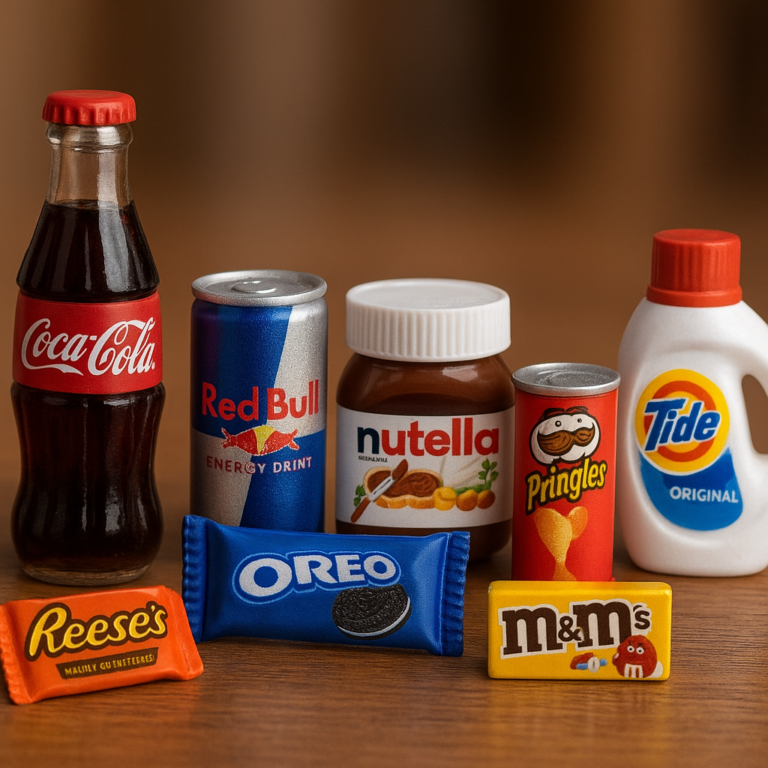
We’ve seen the tiny-package surprise firsthand: a mini can be genuinely useful, not just cute enough to sneak into your bag. The catch is that “mini” can mean a travel-size product, a sample, or a collectible replica—and those deserve very different comparisons. Our guide to mini brands and miniature products helps sort the little bottles from the little lookalikes.
The smart move? Compare the label, amount per use, and cost per unit before buying. A mini may be the perfect trial run—or a surprisingly expensive way to discover you should’ve bought the full size.
Key Takeaways
- Mini products can perform as well as full-size versions when their formula, specifications, and instructions match.
- Check the exact product details. Packaging can look alike even when ingredients, applicators, or features differ.
- Minis shine for travel, sampling, and occasional use; full sizes often suit proven favorites and frequent routines.
- Compare cost per use, not just the checkout total. A mini may cost less upfront but more per ounce or milliliter.
- Collectible miniatures are a different category. Judge them by detail, durability, and intended use—not full-size product performance.
Table of Contents
- ⚡️ Quick Tips and Facts
- 🧭 What Do We Mean by “Mini Brands”?
- 🕰️ How Mini-Size Products Became Big Business
- 🔍 Can Mini Brands Be as Effective as Full-Size Brands?
- What “Effective” Means Depends on the Product
- When Smaller Packaging Changes the Formula or Performance
- ✅ The Biggest Benefits of Mini Brands
- Portability, Travel, and Everyday Convenience
- A Lower-Cost Way to Try New Products
- Less Waste from Unused or Expired Products
- ❌ Mini-Size Product Drawbacks to Consider
- Cost Per Ounce and Value for Money
- Packaging, Shelf Life, and Product Availability
- 🧴 Which Product Categories Work Best in Mini Sizes?
- Skincare, Makeup, and Personal Care
- Travel Toiletries and Household Essentials
- Food, Drinks, and Snack Portions
- Supplements, Medicines, and Products That Need Extra Care
- 🧪 How to Compare Mini and Full-Size Products Fairly
- Check Ingredients, Concentration, and Product Claims
- Compare Unit Price, Dosage, and Number of Uses
- Look for Labels, Safety Seals, and Expiration Dates
- 🛍️ How to Choose Between Mini and Full-Size Brands
- Choose a Mini for Travel, Testing, or Occasional Use
- Choose Full Size for Daily Use and Better Long-Term Value
- A Simple Mini-versus-Full-Size Decision Checklist
- 💡 Smart Ways to Get More Value from Mini Brands
- ❓ Frequently Asked Questions About Mini and Full-Size Products
- Are mini versions made with the same formula as full-size products?
- Do mini products work as well as full-size ones?
- Are mini brands more expensive per ounce?
- Are travel-size products allowed on planes?
- Do mini skincare and makeup products expire faster?
- Are mini products better for the environment?
- When should you avoid buying a mini-size product?
- 🏁 Conclusion
- 🔗 Recommended Links
- 📚 Reference Links
⚡️ Quick Tips and Facts
The short answer: Mini versions can be just as effective as full-size products when the formula, materials, and intended use are equivalent. But “effective” can mean different things: a mini can perform well, cost less upfront, attract attention, or encourage trial—without being the best value for frequent use.
- Check the product, not just the package. Compare ingredients, concentration, specifications, dosage, and instructions. A smaller container doesn’t automatically mean a weaker formula—or an identical one.
- Compare cost per use. Minis often have a lower total checkout cost, but a higher unit cost. Your wallet may notice both.
- Think about how often you’ll use it. A mini can be ideal for travel, sampling, or an occasional-use item. For daily routines, full size often offers better value and less packaging per use.
- Mini brands can be powerful marketing tools. They can make established products feel novel and lower the commitment required to try something new. MOO’s discussion of the psychology and marketing appeal of tiny things explores why small-scale products can attract attention.
- Don’t confuse cute with capable. A tiny product may win a spot in your bag; performance still depends on its design and the job it’s meant to do.
- For collectible miniatures, “effective” means something else. The appeal may be surprise, display, play, or collecting—not a full-size product experience. See our guide to mini brands and miniature products.
| Quick question | Practical answer |
|---|---|
| Can a mini be just as effective? | Yes, if it delivers the same relevant performance for its intended use. Verify rather than assume. |
| Is a mini always cheaper? | It may cost less to buy upfront, but unit cost can be higher. |
| Is full size always better? | No. Full size can be more economical for frequent use; minis can be more convenient for travel and trial. |
| What should you compare first? | Product specifications, ingredient or material details, amount per use, expiration or use-after-opening guidance, and unit cost. |
| What’s the easiest mistake to avoid? | Buying a mini because it looks identical without checking whether its size, formula, or instructions differ. |
🧭 What Do We Mean by “Mini Brands”?
“Mini brands” can mean two different things, and mixing them up leads to some very odd comparisons.
- Mini-size versions of products: travel-size toiletries, miniature cosmetics, sample-size snacks, and compact versions of familiar full-size products.
- Miniature branded collectibles: tiny replicas of real products, packaging, or household items—often designed for collecting or play, not for practical use.
This article focuses mainly on mini-size products compared with full-size versions, while also addressing collectible miniatures where the distinction matters. A tiny replica of a cereal box may look convincing on a shelf, but it won’t make breakfast. That’s not a quality issue; it’s a different purpose.
| Type | Example | Intended job | Fair comparison |
|---|---|---|---|
| Travel-size product | A mini Dove shampoo | Clean hair while traveling or for a short trial | Formula, amount, use instructions, and cost per use |
| Mini cosmetics | A mini Fenty Beauty mascara | Makeup application in a compact format | Wear, application, packaging, and product quantity |
| Sample-size product | A skincare sachet or fragrance sample | Let someone test a product | Whether there is enough product to evaluate it fairly |
| Collectible miniature | A tiny branded pantry item or accessory | Collecting, display, or play | Accuracy, durability, scale, and collector appeal |
Our reviewer rule: First ask what the mini is supposed to do. A product sample should be judged on usefulness and performance; a collectible miniature should be judged on details and craftsmanship. Neither should be graded as if it were the other.
🕰️ How Mini-Size Products Became Big Business
Mini formats are more than shrunken packaging. They give brands a way to make familiar products feel approachable, portable, giftable, collectible, or fun to try.
A mini may appeal to a traveler who doesn’t want to pack a full-size bottle, a shopper curious about an unfamiliar skincare formula, or someone who simply likes a tiny version of a familiar object. MOO’s account of the science of tiny things connects that appeal with attention, novelty, and lower-commitment trial. The article discusses a 2023 study on the perception of small products as cute; as with any behavioral research, that finding describes a tendency, not a guarantee that every shopper will feel the same way.
The format has also become entertainment. In the featured YouTube video, the creator explores “Mini Brands’ home,” marvels at a little rolling pin, and points out that the scale “is not consistent.” That’s part of the charm—and a useful reminder that miniature replicas are not necessarily made to work like real household products. The creator’s excitement is about discovery and collecting, not practical performance.
Why brands make mini versions
- Product trial: A smaller commitment can encourage a first purchase.
- Portability: Compact packaging takes up less room in luggage, a gym bag, or a desk drawer.
- Occasional use: A mini can suit customers who need a product only now and then.
- Gift and discovery sets: Multiple minis let shoppers explore a product range.
- Shelf appeal and social sharing: A tiny package can catch the eye and become an easy conversation starter.
But there’s a catch: a mini can be a great introduction without being a great long-term value. We’ll put that distinction under the microscope shortly.
🔍 Can Mini Brands Be as Effective as Full-Size Brands?
Yes—often, but not automatically. If a mini version uses the same formula, concentration, materials, and functional design as its full-size counterpart, it may provide the same core result for the amount used. If the product’s performance depends on a feature that changes with size—such as an applicator, container, portion, tool, or battery—then the comparison needs more care.
Our reviewers have found that shoppers often mean one of three things by “effective”:
- Does it work? Does the product perform its main job?
- Does it work as well? Is the experience comparable in quality, consistency, or convenience?
- Is it a better purchase? Does it offer good value for your use pattern?
Those are different questions. A mini lotion could be just as moisturizing per application yet run out quickly. A mini mascara may perform well but have a smaller brush or different packaging. A collectible miniature can beautifully made without having any practical function at all.
What “Effective” Means Depends on the Product
| What you’re evaluating | What to check | Why size may matter |
|---|---|---|
| Skincare or cosmetics | Ingredients, concentration, applicator, directions, and product condition | A small container may be less convenient; formulation and packaging can vary by product |
| Personal-care products | Formula, dispensing, hygiene, and number of uses | A smaller opening or bottle may change ease of use |
| Food and snacks | Serving size, nutrition information, freshness, and package integrity | Smaller packs affect portions and may have different packaging |
| Tools or accessories | Materials, dimensions, ergonomics, and intended task | A miniature may not provide the leverage or handling of a full-size tool |
| Collectible replicas | Detail, durability, accuracy, and stated age guidance | The “effect” is enjoyment and display, not real-world utility |
The FDA’s cosmetics labeling guidance is useful when comparing cosmetic products: look at labeling and product claims rather than relying on the front of the package alone. For packaged food, compare the Nutrition Facts label and serving information.
When Smaller Packaging Changes the Formula or Performance
Packaging size and formula are separate variables. A brand may put the same product in a smaller container, or it may change the formulation, applicator, package design, or instructions for a mini version. You can’t establish equivalence from appearance alone.
Before buying, check:
- The ingredient list or product specification.
- Whether the product has the same concentration or active ingredients, where relevant.
- The net contents and suggested amount per use.
- Whether the mini has a different applicator, closure, pump, or dispensing mechanism.
- The product’s expiration date and, where applicable, its period-after-opening guidance.
- Whether the brand describes it as a travel size, sample, or miniature version.
A helpful rule: If the mini and full size have the same formula and directions, judge performance by the product itself. If key details differ—or aren’t disclosed—treat the mini as a separate product until you can verify otherwise.
✅ The Biggest Benefits of Mini Brands
Mini products solve real problems. They can make a bulky routine easier to pack, give you a low-commitment way to test a brand, and help prevent a large product from sitting unused until it expires. Their strongest advantage is often fit: the product matches a particular occasion or habit.
Portability, Travel, and Everyday Convenience
A compact product can be easier to carry in a handbag, backpack, gym kit, or travel toiletry bag. That’s useful for products you want nearby but don’t need in large quantities.
For air travel, the U.S. Transportation Security Administration generally limits liquids, aerosols, gels, creams, and pastes in carry-on bags to containers of 3.4 ounces (100 milliliters) or less per item, subject to its packing rules. Check the current TSA liquids rule before packing, since a product’s size alone doesn’t guarantee it meets every airport or destination requirement.
A mini also makes sense when space matters more than unit value. If your weekend bag is already playing a game of luggage Tetris, a compact Cetaphil travel-size cleanser may be more practical than decanting or packing a large bottle.
A Lower-Cost Way to Try New Products
A smaller package can reduce the upfront commitment when you’re unfamiliar with a brand. That matters in categories such as skincare, fragrance, and makeup, where personal preference and compatibility can be highly individual.
Try a mini when you want to answer a specific question:
- Does the scent suit you?
- Does the texture feel comfortable?
- Does the shade match?
- Does the product work with your existing routine?
- Will you use it often enough to justify a full-size package?
Beauty brands commonly offer minis and discovery formats. Browse current options from Fenty Beauty or Charlotte Tilbury, then verify each listing’s size, ingredients, and return policy. The mini’s lower purchase commitment can be a benefit; it doesn’t mean the unit price is lower.
Less Waste from Unused or Expired Products
A mini can help avoid buying more than you’ll use—especially for an occasional product or a formula you’re still evaluating. But smaller packaging is not automatically more sustainable. One small container may require as much or more packaging relative to its contents than a larger one.
The best choice depends on what actually gets used. A full-size item that you finish may be preferable to several minis that go unused; a mini you finish may be preferable to a full-size bottle you discard partly full.
To make a more informed decision:
- Buy a mini when you’re uncertain you’ll use the full size.
- Choose refillable or recyclable packaging when the brand provides clear, usable options.
- Finish an opened product according to its label and storage directions.
- Don’t stockpile minis simply because they’re small. The drawer of forgotten samples is real, and it has excellent hiding places.
❌ Mini-Size Product Drawbacks to Consider
Minis can be convenient, but small is not synonymous with cheap, sustainable, or suitable.
Cost Per Ounce and Value for Money
The most common surprise is unit cost. A mini may have a smaller checkout total but cost more per ounce, milliliter, gram, or use.
To compare fairly:
- Find the net amount on both packages.
- Compare the same unit (for example, cost per ounce or milliliter).
- Estimate the number of uses, if the brand provides a reasonable guide.
- Consider whether you’ll actually finish the larger package.
- Factor in convenience, travel, and waste—not just the arithmetic.
| Purchase pattern | Mini may make sense when… | Full size may make sense when… |
|---|---|---|
| First-time trial | You want to test the product before committing | You already know the formula works for you |
| Travel | Space and carry-on rules matter | You’re traveling for an extended period and can pack it safely |
| Occasional use | You need only a few uses | The product has a long shelf life and you’ll use it over time |
| Daily routine | You want a bag-friendly backup | You use it consistently and want better unit value |
| Gift or discovery set | Variety is the point | You know the recipient prefers one specific product |
Don’t judge value by package size alone. A high unit price may still be reasonable for a product you’ll use completely; a lower unit price is no bargain if half the bottle goes unused.
Packaging, Shelf Life, and Product Availability
Mini containers can be less convenient to open, dispense, or store. Some may be harder to use with wet hands; others may be easy to lose in a bag. A smaller package also doesn’t guarantee a longer shelf life once opened.
For cosmetics, follow the brand’s storage and use guidance and check the packaging for an open-jar symbol where applicable. The FDA’s cosmetics guidance explains labeling requirements and product information. For medicines, don’t transfer, divide, or use products contrary to their packaging or pharmacist’s instructions; consult the FDA’s medicine safety information.
Other drawbacks include:
- More packaging per amount of product in some formats.
- Limited selection: a brand may offer only a few products as minis.
- Hard-to-read labels on very small containers.
- Faster depletion if the mini is used daily.
- Confusing listings that describe samples, travel sizes, and full-size items inconsistently.
🧴 Which Product Categories Work Best in Mini Sizes?
Some products adapt naturally to small formats. Others need more scrutiny because quantity, dose, packaging, or equipment can affect use.
Skincare, Makeup, and Personal Care
Minis can be especially useful for sampling a formula, building a travel kit, or carrying a touch-up product. They’re less compelling when you already use a product every day and know you’ll finish a full-size package.
When comparing minis from brands such as Fenty Beauty, Charlotte Tilbury, or The Ordinary, check the product’s official details and the specific retailer listing. Don’t assume the same shade, applicator, ingredients, or packaging across every size.
Reviewer tip: For a new skincare product, introduce one product at a time and follow its label directions. A mini gives you a chance to assess whether you like the texture and routine fit, but it may not contain enough product to evaluate every long-term claim.
Travel Toiletries and Household Essentials
Travel-size toothpaste, shampoo, hand cream, and similar products can be handy when you’re away from home. The advantage is obvious: less bulk, and often no need to decant into a separate container.
For air travel, consult the TSA liquids rule and check the rules of your airline and destination. For household products, read storage and safety instructions. A mini cleaning product is not automatically suitable for every surface or use simply because the full-size brand is familiar.
Food, Drinks, and Snack Portions
Small food packages may help with portability, portion planning, and variety. Compare serving size, ingredients, and nutrition information rather than assuming a mini pack is a nutritionally different product. The FDA guide to the Nutrition Facts label explains how to read serving sizes and nutrient amounts.
Keep an eye on packaging: a small pack may be convenient, but several individually wrapped portions can mean more packaging than one larger container. The best option depends on how you’ll use and store it.
Supplements, Medicines, and Products That Need Extra Care
For medicines and supplements, don’t treat the mini/full-size decision as a simple value comparison. Verify the product, active ingredients, strength, directions, and labeling. A smaller package does not mean the dose is smaller or safer.
- Buy from a reputable source and check the manufacturer and packaging.
- Follow the label and ask a pharmacist or healthcare professional if anything is unclear.
- Don’t split doses, combine products, or transfer medicines into unlabeled containers unless a qualified professional advises it.
- For supplements, review the NIH Office of Dietary Supplements’ consumer fact sheets and discuss possible interactions with a clinician.
🧪 How to Compare Mini and Full-Size Products Fairly
A fair comparison needs more than two packages sitting side by side. Use this checklist before deciding.
Check Ingredients, Concentration, and Product Claims
Step 1: Find the full product name. Similar-looking products may be different formulas or versions.
Step 2: Compare the ingredient list or technical specifications. For cosmetics, use the package and brand’s product page. For electronics or tools, compare the model number and specifications.
Step 3: Look for differences in directions and claims. A mini may be a sample, a travel format, or a distinct product—not simply the same item in a smaller bottle.
Step 4: Verify the intended use. If the product is a collectible, decorative miniature, or novelty item, judge it by that purpose rather than by full-size functionality.
Compare Unit Price, Dosage, and Number of Uses
Step 5: Calculate unit cost. Divide the amount you pay by the net quantity, keeping measurement units consistent.
Step 6: Estimate uses realistically. If a brand provides a suggested amount per use, use it as a starting point. Don’t assume every customer uses the same amount.
Step 7: Match the comparison to your habits. If you use a product daily, the smaller package may be inconvenient even if its performance is identical.
| Comparison factor | Mini | Full size | What to ask |
|---|---|---|---|
| Net contents | Usually less | Usually more | How much product is actually included? |
| Cost per unit | Can be higher | Can be lower | What is the unit price—not just the total? |
| Portability | Often easier | Often bulkier | Where will you store or carry it? |
| Trial commitment | Often lower | Often higher | Are you still deciding whether you like it? |
| Packaging | May use more per amount | May use less per amount | Is there a refill or recycling option? |
| Use pattern | Suits occasional use | Suits regular use | Will you finish it before it expires? |
Look for Labels, Safety Seals, and Expiration Dates
Step 8: Read the package before purchase. Check net quantity, ingredients, warnings, directions, manufacturer, and product condition.
Step 9: Check expiry and storage information. This is especially important for products with active ingredients, food, medicines, and cosmetics.
Step 10: Buy from a trustworthy seller. Counterfeit or improperly stored products can make a size comparison meaningless. For health-related products, ask a pharmacist or clinician when you’re unsure.
🛍️ How to Choose Between Mini and Full-Size Brands
Use your routine, storage needs, confidence in the product, and expected usage to make the call.
Choose a Mini for Travel, Testing, or Occasional Use
A mini is a strong choice if:
- You’re trying an unfamiliar brand or formula.
- You want a compact item for travel, commuting, or a gym bag.
- You use the product only once in a while.
- You want variety without buying multiple full-size items.
- You’re not sure you’ll finish the full-size product.
That last point matters. A mini can better value in practice if it prevents waste, even when its unit cost is higher.
Choose Full Size for Daily Use and Better Long-Term Value
Full size is often the better fit if:
- You use the product consistently.
- You already know the product works for you.
- The full-size package is easy to store and dispense.
- You’ve compared unit prices and the larger option is more economical.
- You’ll finish it within the product’s recommended use period.
Our reviewers often take a “test small, stock up only when confident” approach for products that are personal or new. For a household staple you use every week, full size may be the sensible choice. For an unfamiliar moisturizer, a mini can save you from a much bigger commitment.
A Simple Mini-versus-Full-Size Decision Checklist
Answer these questions in order:
-
Do I know this product suits me?
If not, consider the mini—provided it’s a genuine, clearly labeled product. -
Will I use it often?
Frequent use points toward full size; occasional use points toward a mini. -
Do I need portability?
A smaller format may be worth any unit-cost tradeoff. -
Are the formula and specifications the same?
Compare the labels and official product details. -
Will I finish the larger size?
If the honest answer is “probably not,” a mini may be the more practical buy. -
Is the unit cost fair for my needs?
Calculate it, then consider convenience and waste.
The quick verdict: Buy mini to test, travel, or use occasionally. Buy full size for a proven favorite you use regularly. If the product’s details differ, compare it as a separate product—not a smaller twin.
💡 Smart Ways to Get More Value from Mini Brands
- Use minis strategically. Keep a travel kit or bag backup rather than buying small versions of everything.
- Check whether the brand offers a discovery set. A set can be a practical way to compare several products, but confirm the included sizes and whether the products match your needs.
- Record what you like. Note the formula, shade, scent, or model name before you buy the larger version.
- Read reviews for specific details. Look for comments about packaging, dispensing, wear, scent, and how quickly the mini ran out. Treat anecdotal reviews as personal experience, not proof that every user will have the same result.
- Avoid comparing unlike listings. A sample, travel size, gift-with-purchase item, and miniature collectible may look similar online but serve different purposes.
- Check official product information. Start with the brand’s own page, then compare reputable retailer listings.
- For collectibles, inspect scale and compatibility. As the featured video playfully illustrates, miniatures may not share a consistent scale. Check measurements before expecting pieces to fit a specific dollhouse or display.
- Keep product safety in view. Follow the label, storage instructions, and any age guidance, especially for products used on the body or around children.
❓ Frequently Asked Questions About Mini and Full-Size Products
How do mini brands impact the popularity of established full-size brands?
Mini formats can help established brands reach shoppers who want a lower-commitment trial, a portable version, or a collectible experience. They may also make familiar packaging feel fresh and shareable. MOO’s article on the science of tiny products discusses how small scale can draw attention and encourage interest.
That doesn’t mean minis automatically increase long-term popularity. A poor experience can put a shopper off the brand; a satisfying mini can lead to a full-size purchase. The mini may open the door, but product quality and fit determine whether someone stays.
What marketing strategies work best for mini brands versus full-size brands?
Mini-product marketing works well when it emphasizes trial, portability, gifting, discovery, and visual appeal. Full-size marketing can focus more on routine use, product performance, refill options, and value over time.
Effective mini campaigns should make the format’s purpose clear: Is it a travel product, a sample, a gift set, or a collectible? Clear size and quantity information prevents disappointment. Full-size campaigns should explain the benefits of larger packaging without implying that every shopper needs it.
Can mini brands build the same level of brand loyalty as full-size brands?
They can help build loyalty, but the package size alone won’t do the work. A mini may introduce a customer to a brand, while repeat use, consistent quality, good customer service, and a product that suits their needs are more likely to keep them coming back.
A collectible mini can create a different kind of loyalty: interest in the series, designs, or hunt for new releases. That’s not the same as loyalty to a full-size product used every day, even if both involve enthusiasm for the brand.
How do consumer perceptions differ between mini and full-size brands?
Shoppers may see minis as cute, convenient, affordable to try, or easy to carry. They may see full-size products as better value, more practical for regular use, or more suitable for a long-term routine. These are common perceptions, not rules.
The right comparison depends on the shopper’s purpose. A traveler may value portability; a frequent user may prioritize cost per use. The best purchase is the one that matches the actual need—not the format with the most appealing package.
Do mini brands offer the same quality as full-size brands?
Sometimes. A mini may contain the same product in different packaging, but you should verify the formula, specifications, and labeling for the exact item. Brands can also offer samples, travel versions, or distinct products with their own features.
Check official product details and compare labels. If key information is missing, don’t assume the mini and full size are identical.
What are the advantages of mini brands compared to full-size brands?
The main advantages are:
- Portability for travel and everyday carry.
- Lower upfront commitment when trying an unfamiliar product.
- Less product to use up for occasional needs.
- Variety in discovery sets or collectible ranges.
- Convenience when storage space is limited.
Their drawbacks include a potentially higher unit cost, more frequent repurchasing, and packaging that may be less efficient relative to the amount of product.
Do mini brands have the same market impact as full-size brands?
They can contribute to a brand’s visibility and trial, but they usually play a different role from full-size products. Minis may attract attention or introduce a product; full-size versions often support repeated use and larger-volume purchasing.
A mini can be commercially meaningful without replacing the full-size line. Its impact depends on the category, audience, distribution, and whether shoppers go on to purchase again.
Are mini brands more cost-effective than full-size brands?
Not necessarily. Minis may cost less upfront, while full-size versions often offer a lower cost per unit. But the better value depends on whether you’ll finish the larger package and how much you value portability or trial.
Compare the unit price and your likely number of uses. If you’re testing a product, paying more per ounce for a mini may still be sensible. If you use it daily and know it suits you, full size is often more economical.
Are mini brands as popular as full-size brands?
Popularity varies by product category and audience. Some shoppers seek minis for travel or collecting; others prefer full size for routine use and value. A mini’s visibility on social media or in gift sets doesn’t necessarily mean it outsells the core product.
It’s more helpful to ask which format is popular with the audience and for what reason than to assume one size wins everywhere.
How should I judge collectible mini brands?
Judge them by accuracy, detail, durability, scale, and how well they suit your collection or play setup. Check whether accessories are meant to fit a particular dollhouse or figure; tiny replicas can vary in scale, as the creator notes in the featured video.
For small toys or collectibles intended for children, review the product’s age guidance and safety information. A realistic-looking miniature is not necessarily a functional toy or a full-size household item.
Can a mini product be more effective than the full-size version?
It can be more effective for a specific situation—for example, a compact product may be easier to pack, carry, or use occasionally. That does not mean its formula or performance is inherently superior. It means the mini format may fit the task better.
To compare performance fairly, match the products on purpose, specifications, amount used, and conditions. Convenience is part of usefulness, but it isn’t a substitute for checking what the product actually does.
How can I tell whether a mini is a sample or a regular product?
Read the package and retailer listing carefully. Look for terms such as sample size, travel size, mini, gift-with-purchase, or collectible; compare the net quantity; and confirm whether the brand sells the product as a regular retail item.
If the description is unclear, check the brand’s official product page or contact the seller before buying. A photo of a tiny package is not enough to confirm what you’re getting.