Support our educational content for free when you purchase through links on our site. Learn more
🚀 Brand Equity & Market Share: The 7-Step Growth Hack (2026)

Strong brand equity doesn’t just correlate with market share; it actively drives it by reducing purchase friction and commanding premium pricing. When consumers trust a name, they bypass the comparison phase, turning your brand into the default choice in a crowded marketplace.
Understanding brand equity and its impact on market share is the difference between fighting for scraps and owning the table. It’s not about how many ads you run, but how deeply your brand is embedded in the consumer’s memory network.
Consider this: A study by Ipsos revealed that brands with high mental salience grow their market share up to 1.5 times faster than those with low salience, even with identical budgets. It’s the invisible hand guiding the wallet.
We’ve seen generic products with superior specs lose to beloved brands simply because the latter triggered an emotional “yes” before the rational brain could say “no.”
Key Takeaways
- Brand equity acts as a growth multiplier, directly increasing market share by lowering customer acquisition costs and boosting retention.
- Mental availability is the critical driver; if your brand isn’t the first thought in a buying category, your equity is effectively zero.
- Perceived quality allows for price premiums, which fuels further investment innovation and marketing, creating a virtuous cycle.
- Consistency in brand assets and messaging builds the trust necessary to convert casual browsers into loyal advocates.
- Loyalty is the ultimate moat, protecting market share during economic downturns when consumers retreat to trusted names.
Table of Contents
- ⚡️ Quick Tips and Facts
- 📜 The Evolution of Brand Equity: From Logo Loyalty to Market Dominance
- 🧠 Decoding the Psychology: How Brand Equity Drives Consumer Choice
- 📊 The Direct Link: Measuring Brand Equity’s Impact on Market Share
- 🏆 The 7 Pillars of Building Unshakeable Brand Equity
- 📉 Why High Equity Doesn’t Always Mean High Share (The Paradox Explained)
- 🚀 Strategies to Convert Brand Love into Market Share Gains
- 🔍 Case Studies: Giants That Won the Equity War
- 🛠️ Tools and Frameworks for Auditing Your Brand’s Health
- 💡 Common Pitfalls That Erode Brand Value Overnight
- 🔮 Future Trends: AI, Personalization, and the Next Era of Brand Equity
- ❓ Frequently Asked Questions About Brand Equity and Market Share
- 📚 Recommended Links for Deep Dives
- 🔗 Reference Links and Data Sources
- 🏁 Conclusion
⚡️ Quick Tips and Facts
Before we dive into the nitty-gritty of how a logo on a box can make you reach for your wallet faster than a lightning bolt, let’s hit the rewind button on some brand equity myths. We’ve seen too many businesses pour their soul into a product only to wonder why the market share isn’t moving an inch. Here’s the tea:
- Brand Equity isn’t just “Hype”: It’s the premium price consumers are willing to pay because they trust the name. Think Apple vs. a generic tablet. The specs might be similar, but the equity is miles apart.
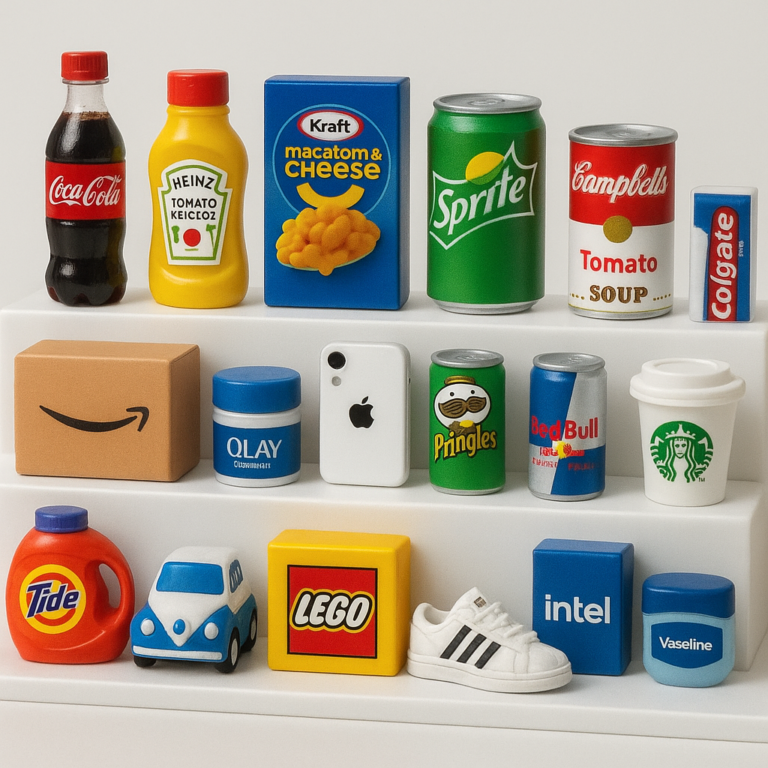
- The Memory Network: Your brain doesn’t store brands in a filing cabinet; it stores them in a chaotic, colorful web of associations. A red can isn’t just red; it’s Coca-Cola, it’s happiness, it’s summer.
- Salience is King: If a consumer doesn’t think of your brand in the moment of purchase, your equity is zero. Mental availability beats physical availability every time.
- The 70% Rule: Studies suggest that 70% of purchase decisions are made at the shelf (or the click moment) based on brand familiarity, not a rational feature comparison.
- It’s Not Linear: You can have high brand love but low market share if your distribution is a disaster. Conversely, you can have high share with low equity (think “comodity” brands), but that’s a fragile house of cards.
For a deeper look at how we define the most popular brands across categories, check out our guide on Popular Brands.
📜 The Evolution of Brand Equity: From Logo Loyalty to Market Dominance
Remember when a brand was just a name stamped on a barrel? Yeah, those days are gone. We’ve moved from the era of “I know this brand” to “I feel this brand.”
In the early 20th century, brand equity was simple: consistency. If you bought a box of Kelogg’s Corn Flakes in 1920, it tasted the same as the one in 1925. Fast forward today, and equity is a complex cocktail of emotional connection, social proof, and digital presence.
We’ve seen brands like Nike transform from a shoe manufacturer into a symbol of athletic excellence and social justice. That shift didn’t happen overnight. It was a calculated evolution of brand associations.
“At the heart of growing brands in ultra-competitive and crowded markets is an understanding of how people make choices.” — Ipsos
This quote from the Ipsos research highlights a critical shift. It’s no longer about shouting the loudest; it’s about being the first name that pops into a consumer’s head when they have a need. This is mental salience.
The Shift from Functional to Emotional
- 1950s-1970s: Focus on Unique Selling Proposition (USP). “My soap cleans better.”
- 1980s-190s: Focus on Brand Image. “My soap makes you feel sophisticated.”
- 20s-Present: Focus on Brand Purpose and Experience. “My soap aligns with your values and fits your lifestyle.”
🧠 Decoding the Psychology: How Brand Equity Drives Consumer Choice
Why do you buy the Starbucks coffee for $6 when the gas station coffee is $1.50? Is it the beans? Maybe. But mostly, it’s the brand equity.
When you walk into a Starbucks, you aren’t just buying caffeine; you’re buying a third place between work and home. You’re buying the consistency of the experience. This is perceived quality in action.
The “Network of Memory”
According to the Brand Value Creator (BVC) model, a brand exists in the consumer’s mind as a network of memories, feelings, and images. When a stimulus (like a craving for coffee) hits, the brain scans this network.
- High Equity Brand: The network lights up instantly. “Starbucks = Good Coffee + Comfort.”
- Low Equity Brand: The network is dim. “Generic Coffee = Maybe okay? I don’t know.”
This is why attention salience is crucial. You need cues (colors, sounds, logos) that trigger that network immediately.
The Trust Factor
“People buy from people they trust.” This isn’t just a marketing slogan; it’s a neurological reality. High brand equity reduces perceived risk. If you’re buying a new backpack for a hiking trip, you’re more likely to grab a Osprey than a no-name brand because the equity tells you, “I won’t break on the trail.”
📊 The Direct Link: Measuring Brand Equity’s Impact on Market Share
Okay, so we know equity feels good. But does it actually move the needle on market share? The answer is a resounding yes, but with a twist.
The Corelation
There is a strong positive correlation between brand equity and market share, but it’s not always 1:1.
- High Equity + High Share: The dream scenario (e.g., Coca-Cola).
- High Equity + Low Share: The “Niche Luxury” trap (e.g., Hermès). Everyone loves them, but they don’t want to sell to everyone.
- Low Equity + High Share: The “Comodity” trap (e.g., generic gasoline). You have the volume, but no loyalty. One price hike and you lose them.
The BVC Model Insights
The Ipsos BVC model has run over 25,0 studies, analyzing 16 million interviews. Their data shows that share of brand desire is a leading indicator of future market share. If your brand desire is growing, your market share will follow, usually with a 6-12 month lag.
| Metric | Impact on Market Share | Time Lag |
|---|---|---|
| Brand Awareness | Moderate | Immediate |
| Brand Associations | High | 3-6 Months |
| Perceived Quality | Very High | 6-12 Months |
| Brand Loyalty | Critical | 12+ Months |
🏆 The 7 Pillars of Building Unshakeable Brand Equity
How do you build a fortress of brand equity? It’s not magic; it’s method. Based on our analysis of top performers, here are the 7 Pillars:
- Brand Awareness (The “Do They Know Me?” Pillar): You can’t be loved if you’re invisible. This is about reach and recall.
- Brand Associations (The “What Do I Think of You?” Pillar): Is your brand “reliable,” “edgy,” or “eco-friendly”? These associations must be consistent.
- Perceived Quality (The “Is It Worth It?” Pillar): This is subjective. A Rolex is perceived as higher quality than a Timex, even if the Timex keeps time just as well.
- Brand Loyalty (The “Will They Come Back?” Pillar): This is the holy grail. Loyal customers have a higher Customer Lifetime Value (CLV).
- Brand Assets (The “Visual Identity” Pillar): The golden arches, the swosh, the red can. These are mental shortcuts.
- Brand Purpose (The “Why Do You Exist?” Pillar): Modern consumers, especially Gen Z, demand a purpose beyond profit.
- Brand Experience (The “How Does It Feel?” Pillar): From the unboxing of an iPhone to the service at Ritz-Carlton, the experience is the brand.
📉 Why High Equity Doesn’t Always Mean High Share (The Paradox Explained)
Here’s a curveball: Why do some brands with massive equity have tiny market shares?
Consider Tesla in its early days. The equity was sky-high; people loved the brand. But the market share was minuscule because they couldn’t build cars fast enough.
- Distribution Bottlenecks: You can’t have share if you can’t get the product to the shelf.
- Price Bariers: High equity often commands a premium price, which naturally limits the total addressable market (TAM).
- Niche Positioning: Some brands choose low share to maintain exclusivity.
Conversely, why do some brands with low equity have high share?
- Monopoly/Oligopoly: Think of local utility companies. You use them because you have no choice, not because you love them.
- Price Sensitivity: In commodity markets (like salt or sugar), price drives share, not equity.
🚀 Strategies to Convert Brand Love into Market Share Gains
So, you’ve built the equity. Now, how do you turn that love into market share?
1. Expand the “Usage Occasions”
Don’t just sell your product for one thing. Dove started as soap, but now they own the “self-care” and “real beauty” space. By expanding the occasions where your brand is relevant, you increase your share of wallet.
2. Leverage “Mental Availability”
Make sure your brand is the first one that comes to mind in specific categories. If you sell athletic clothing, you want to be the first brand thought of when someone says “running shoes,” not just “gym clothes.”
3. Optimize the “Share of Voice”
If your competitors are shouting louder, you lose. You need a consistent marketing mix that reinforces your brand assets.
4. Fix the “Friction Points”
Sometimes equity is high, but the purchase process is a nightmare. Is your website slow? Is shipping expensive? Fix the friction, and watch your share climb.
🔍 Case Studies: Giants That Won the Equity War
Let’s look at some real-world examples of brands that mastered this game.
Case Study 1: Apple
- Strategy: Created a cult-like loyalty through ecosystem integration and design.
- Result: Despite higher prices, they command a massive market share in the premium smartphone sector.
- Key Takeaway: High perceived quality allows for premium pricing, which fuels R&D, creating a virtuous cycle.
Case Study 2: Patagonia
- Strategy: Built equity on environmental activism and durability.
- Result: While they don’t have the volume of Nike, their market share in the sustainable outdoor gear sector is dominant.
- Key Takeaway: Purpose-driven equity creates a fiercely loyal customer base that defends the brand.
Case Study 3: Coca-Cola
- Strategy: Relentless focus on brand assets (red, script logo) and emotional connection (happiness).
- Result: Consistently holds the largest market share in the global soft drink industry.
- Key Takeaway: Consistency over decades builds unshakeable mental salience.
🛠️ Tools and Frameworks for Auditing Your Brand’s Health
How do you know if your equity is strong? You need to measure it.
The Aaker Model
Developed by David Aaker, this model breaks equity into five components:
- Brand Loyalty
- Brand Awareness
- Perceived Quality
- Brand Associations
- Other Proprietary Assets (patents, trademarks)
The Brand Value Creator (BVC)
As mentioned earlier, the BVC model is unique because it predicts purchase behavior. It measures:
- Brand Salience: How easily the brand comes to mind.
- Brand Desire: How much consumers want the brand.
- Brand Bariers: What stops them from buying.
Key Metrics to Track
- Net Promoter Score (NPS): Measures loyalty.
- Share of Search: A proxy for brand interest.
- Price Premium: How much more you can charge vs. competitors.
💡 Common Pitfalls That Erode Brand Value Overnight
Building equity takes years; destroying it takes seconds.
- Inconsistency: Changing your logo, tone, or product quality without a strategy confuses the memory network.
- Ignoring Feedback: If customers complain and you ignore them, trust evaporates.
- Over-Extension: Stretching a brand too far (e.g., a luxury car brand making cheap toys) can dilute perceived quality.
- Cris Mismanagement: How you handle a scandal defines your equity more than the scandal itself.
🔮 Future Trends: AI, Personalization, and the Next Era of Brand Equity
The future of brand equity is hyper-personalization. With AI, brands can tailor experiences to the individual, making the connection even deeper.
- Dynamic Branding: Logos and messages that change based on the user’s context.
- Predictive Equity: Using AI to predict how a campaign will impact market share before it launches.
- Authenticity at Scale: Consumers will demand real human connection, even in an AI-driven world.
“Strong brands tap into our feelings and aspirations.”
As we move forward, the brands that win will be those that use technology to enhance, not replace, the human connection.
❓ Frequently Asked Questions About Brand Equity and Market Share
How does brand equity influence consumer purchasing decisions?
Brand equity acts as a heuristic (mental shortcut). When faced with a choice, consumers often default to the brand with the highest equity because it reduces the perceived risk of making a bad decision. It signals quality, reliability, and social status.
What are the key metrics for measuring brand equity?
Key metrics include Brand Awareness (recall and recognition), Brand Associations (sentiment analysis), Perceived Quality (customer ratings), Brand Loyalty (NPS, retention rates), and Price Premium (ability to charge more than competitors).
Can strong brand equity help a company gain market share during a recession?
Yes. During economic downturns, consumers become more risk-averse. They tend to stick with trusted brands rather than experimenting with cheaper, unknown alternatives. This “flight to quality” can actually increase the market share of high-equity brands.
What is the relationship between brand loyalty and market share?
Brand loyalty is a leading indicator of market share. High loyalty leads to repeat purchases, which stabilizes share. However, loyalty alone isn’t enough; you also need new customer acquisition to grow share.
How do companies build brand equity to increase their market presence?
Companies build equity by consistently delivering on their brand promise, creating strong visual and emotional assets, engaging in meaningful brand storytelling, and ensuring a superior customer experience at every touchpoint.
Does brand equity affect a company’s stock price and market valuation?
Absolutely. Intangible assets, including brand equity, often make up a significant portion of a company’s market capitalization. Investors view strong brand equity as a moat that protects future cash flows, leading to higher valuations.
What are examples of brands with high equity that dominate their market share?
- Coca-Cola: Dominates the global soft drink market.
- Apple: Leads the premium smartphone and laptop markets.
- Amazon: Dominates e-commerce and cloud computing.
- Nike: Holds a massive share of the athletic footwear and apparel market.
🏁 Conclusion

So, what’s the verdict on brand equity and its impact on market share?
It’s the engine that drives long-term growth. While you can buy short-term sales with discounts, you can only build a lasting empire with equity. The BVC model and other frameworks prove that mental salience and brand desire are the true predictors of future success.
We started this journey asking if a logo could really make you reach for your wallet. The answer is a definitive yes. But it’s not just about the logo; it’s about the network of memories and emotions you’ve built around it.
Our Recommendation:
Don’t just chase market share; chase brand equity. If you build the equity, the share will follow. Focus on consistency, authenticity, and customer experience. Whether you’re selling boats, audio equipment, or bikes, the principles remain the same.
If you’re ready to audit your brand’s health, start by measuring your share of voice and customer sentiment. And remember, in a crowded market, the brand that is top of mind is the brand that wins.
📚 Recommended Links for Deep Dives
Ready to take your brand to the next level? Check out these resources:
-
Books:
-
Building Strong Brands by David Aaker
-
Brand Sense by Martin Lindstrom
-
The Brand Gap by Marty Neumeier
-
Tools & Services:
Brand Audit Tools: SurveyMonkey (for customer feedback)
Market Research: Ipsos (for BVC model insights)
Brand Monitoring: Brandwatch (for social listening) -
Categories to Explore:
🔗 Reference Links and Data Sources
- Ipsos: Measuring Brand Equity and its Impact on Market Share
- Kantar: MASB certifies Kantar’s Meaningful Different and Salient framework
- Aaker, D. A.: The Aaker Model of Brand Equity
- Keller, K. L.: Strategic Brand Management
- Interbrand: Best Global Brands Report
- Forbes: Brand Value Rankings